
Big Problem vs Small Problem Conflict Resolution Pack | Tattling vs Reporting (Snitching)
£15.00 Original price was: £15.00.£9.00Current price is: £9.00.
Earn 9.00 Reward Points
*Introductory sale price for a limited time only!*
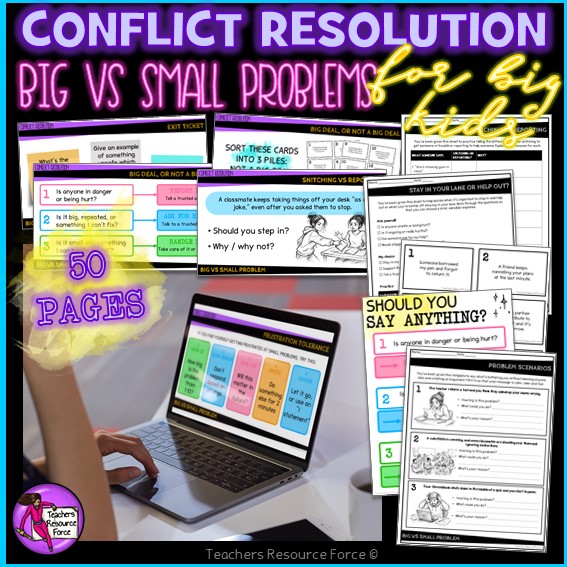
Is every little thing a big problem in your class? This big problem vs small problem resource teaches students to size up a conflict and respond well: handle it, ask for help, or report it. Built around one simple decision path, it helps older students answer how big is my problem?, tell the difference between tattling vs reporting (and tattling vs telling), (but for a more mature resource, we use the terms “snitching”!) and know what’s safe vs unsafe. Made for upper elementary, middle and high school, with real classroom situations and a mature design and language, so it works for big kids who’ve outgrown the little-kid versions (but often not the behaviors, haha)
- Instant download
- Secure checkout with PayPal
- Questions? Happy to help!
| Age Group | |
|---|---|
| Resource Type |
About this resource:
Students learn to judge the size of the problem with big deal little deal sorting cards, a big deal vs little deal lesson (we call it “not a big deal” and “really big deal” over here, though!), and a big problem small problem decision path. They practice conflict resolution activities and conflict resolution scenarios based on real classroom life: group work, devices, AI, shared equipment and friendship wobbles. Build frustration tolerance with activities for frustration tolerance that teach five quick moves for dealing with frustration. Then teach students to speak up with I statements conflict practice and I feel statements, and to know when to mind your own business (or, stay in your lane).
For older students, “tattling” becomes “snitching,” and your students will decide when telling an adult is reporting, not snitching. The big problem little problem idea works at any age, and this resource keeps the familiar phrases while reworking everything for older students.
➨ What You’ll Get:
Lesson and teacher support
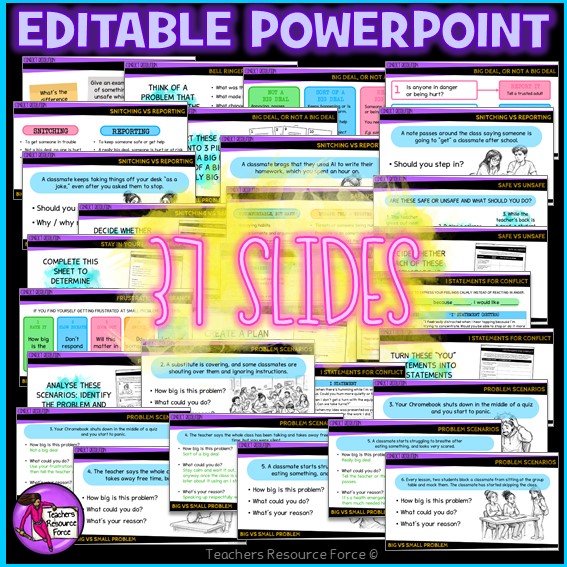
- 37 slide editable PowerPoint lesson on big problem vs small problem, with discussion questions, scenarios, exit ticket and answers on the slides
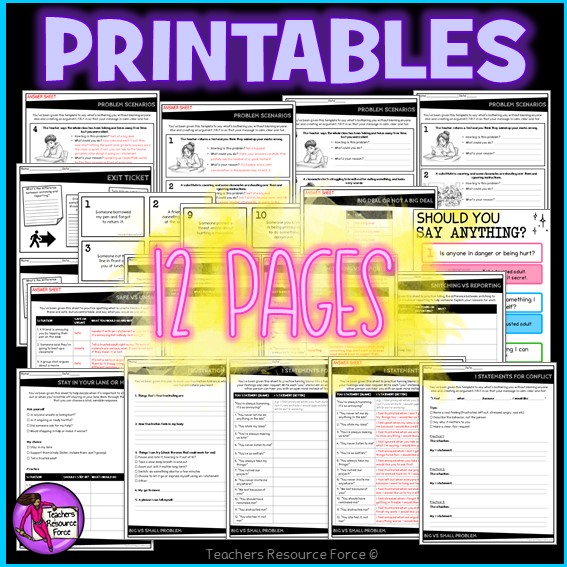
- 12 printable activities that reinforce the learning and help students practice the concepts
- Answer keys for every activity
Big problem, little problem
- Big deal little deal (big deal or not a big deal) slides and decision path poster
- Problem-size sorting cards (16 cards), to sort into size of the problem piles
Tattling (snitching) vs reporting and safe vs unsafe
- Tattling (snitching) vs reporting (tattling vs telling) slides and sorting worksheets
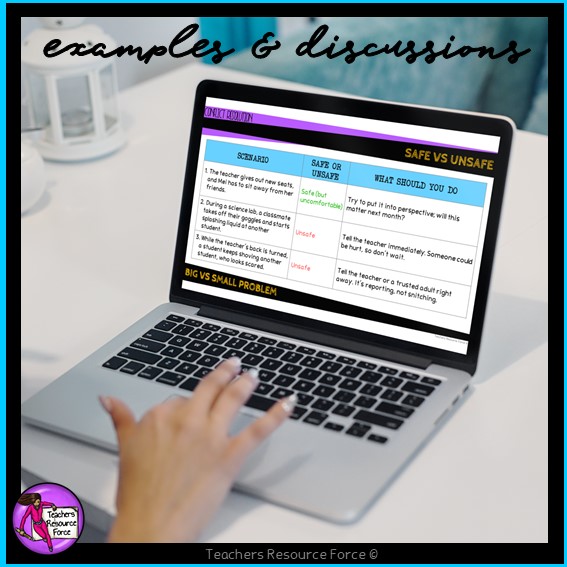
- Safe vs unsafe slides and worksheets
- Is it my business (stay in your lane) sheet, to practice when to step in and when to mind your own business
Frustration tolerance
- Frustration tolerance slide with 5 moves
- My frustration tolerance plan worksheet
I statements and conflict resolution
- I statements for conflict slides and template, with I feel statements practice
- “Fix the statement: You to I” practice page
- Scenario practice slides, plus general problem scenarios to identify the size, what to do and why
➨ Why Teachers Love This:
- A complete no prep lesson: print, project and teach
- One simple decision path that students can use all year
- Teaches students to stay calm and put problems in proportion
- Helps students tell a real safety concern from a small annoyance
- Realistic classroom scenarios that older students relate to
- Builds frustration tolerance, empathy and communication skills
- Reworked for upper elementary, middle and high school
- Reduces tattling / snitching and drama, so you can focus on teaching
➨ Ways to Use It:
- Teach as one longer lesson or three short ones
- Use as a back to school or mid-year reset for classroom conflict
- Use with small groups or one to one in counseling and intervention
- Use as part of an SEL, advisory or character education program
- Use the scenario cards as stations, partner work or exit tickets
- Display the decision path poster and refer back to it all year
By the end, your students know how to judge how big a problem really is, handle the small ones, ask for help with the medium ones, and speak up straight away about the big ones. Grab this big problem vs small problem resource today and build a calmer, safer, kinder classroom!
See more in the preview HERE!
| Age Group | |
|---|---|
| Resource Type |
Only logged in customers who have purchased this product may leave a review.


Reviews
There are no reviews yet.